
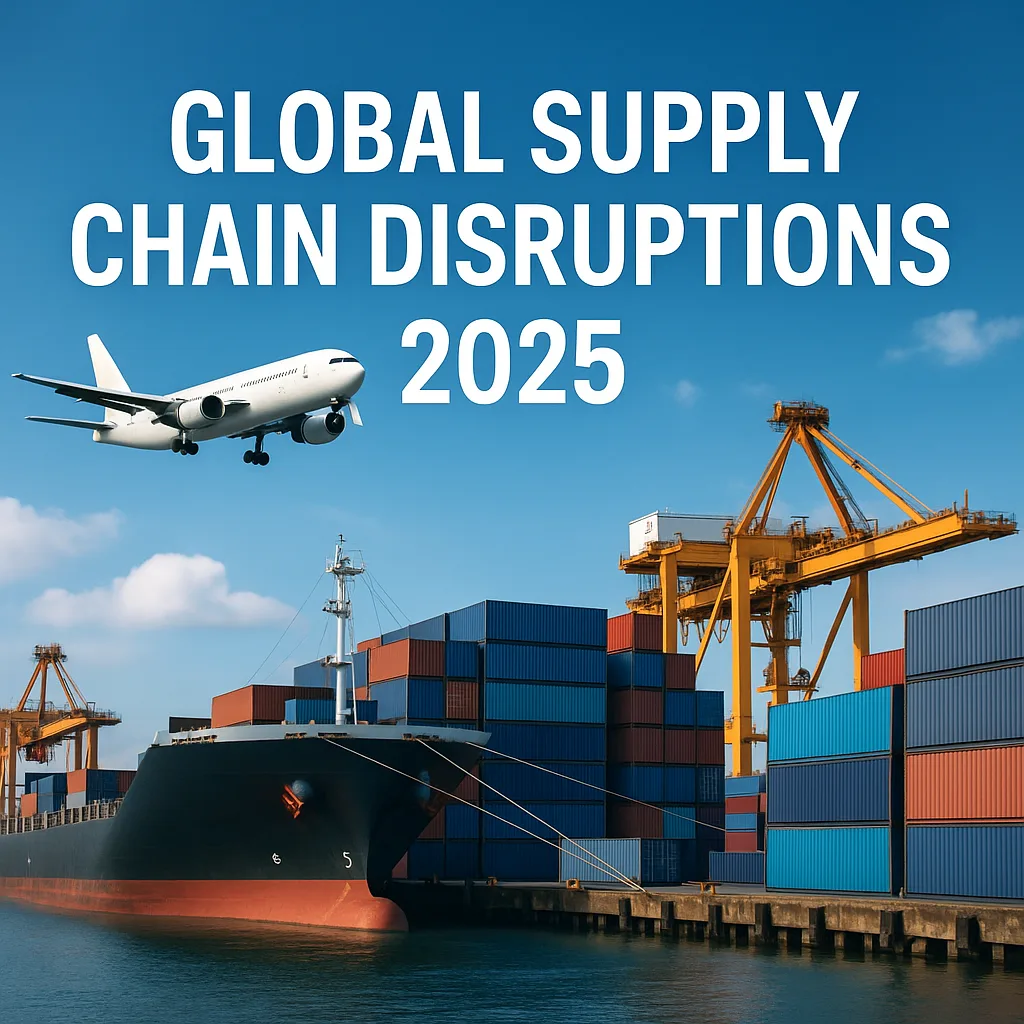
The global supply chain continues to face major disruptions in 2025.
From rising fuel costs to unexpected delays in major ports, shipping companies and importers are experiencing challenges that directly affect delivery times and logistics operations.
Although these challenges are global, they also push the industry to evolve and adopt smarter, faster, and more flexible solutions.
🟩 1. Rising Shipping Costs and Capacity Shortages
Ocean freight rates have increased due to fuel price changes and limited vessel capacity.
As a result, many businesses are shifting from traditional container shipping to alternatives like LCL shipments to reduce costs.
Companies now prefer:
Flexible booking options
Guaranteed space protection
Better transit time management
This shift encourages freight forwarders to diversify their carrier networks and expand global partnerships.
🟩 2. Port Congestion and Delays
Major international ports are experiencing heavy congestion, leading to:
Longer vessel waiting times
Slower container handling
Increased risk of missed delivery windows
Therefore, many logistics companies are adopting advanced tracking systems to provide real-time visibility and improve communication with customers.
🟩 3. Growth of Air Freight as a Faster Alternative
Air freight demand is rising sharply.
Businesses now choose air cargo for urgent shipments because:
It offers shorter transit times
Capacity is more stable
Routing is more predictable
Moreover, improved partnerships with airlines allow forwarders to secure better space allocation and faster processing.
🟩 4. Increased Importance of Customs Clearance Efficiency
With stricter regulations and new global trade agreements, customs clearance has become more complex.
Companies that offer fast and accurate documentation handling — like Blue Logistics Services — now have a major competitive advantage.
Efficient clearance avoids:
Delays
Storage fees
Unexpected fines
🟩 5. Rise of Door-to-Door and Multi-Mode Logistics
Customers today want simplicity.
Door-to-door services are expanding because they eliminate the hassle of dealing with multiple providers.
Multi-mode transport is growing because it combines:
Sea + Air
Trucking + Warehousing
Customs + Final-mile delivery
This creates a seamless, end-to-end shipping experience.
🟦 Conclusion
The logistics industry in 2025 is changing rapidly.
Companies that adapt to new challenges — through flexible freight solutions, advanced tracking, stronger global networks, and efficient customs handling — will lead the future of global shipping.
Blue Logistics Services continues to expand its capabilities to ensure faster, safer, and more reliable freight solutions for customers worldwide.